
If you have had LASIK, cataracts surgery, PRK, SMILE, or any other type of eye surgery, you may be curious about whether it can affect your FAA color vision test results. Understanding the LASIK effect on FAA color vision test results is particularly important for pilots considering or recovering from laser eye surgery.
Although eye surgery cannot fix an inherent color blindness issue, it can have an impact on other parts of vision, such as sharpness, clarity, sensitivity to glare, brightness of colors, and overall contrast of the colors.
This is important information for pilots because a surgical procedure will enhance vision without correcting the color perception issue. Knowing the specifics of each surgery, how vision will be enhanced or altered, and the current FAA requirements can help you know what to expect from color vision testing.
Understanding FAA Color Vision Requirements
Color vision is significant in aviation since pilots require the ability to distinguish colors utilized in aircraft controls and other visual cues, including navigation aids and airport lighting.
The FAA currently uses approved computerized color vision testing for applicable applicants. The three computerized tests are:
Waggoner Computerized Color Vision Test
The Waggoner test evaluates color discrimination using a computer-based assessment. It is one of the FAA-approved options for evaluating color vision.
Rabin Cone Test
The Rabin Cone Test evaluates cone-specific color discrimination. Testing is performed separately for each eye.
CAD Vision Test
The Colour Assessment & Diagnosis (CAD) test measures color discrimination using a computerized system designed to identify specific color vision deficiencies.
In contrast to the regular eye chart that only measures visual acuity, an FAA pilot color vision test assesses color discrimination skills instead of visual acuity. One may be having great visual acuity but poor color discrimination skills as a pilot.
Why Does Color Vision Matter for Pilots?
Pilots may need to distinguish:
- Red, green, and white aviation lights
- Runway and taxiway lighting
- Instrument and cockpit displays
- Color-coded aviation information
- Visual signals used during flight operations
The FAA’s current requirements should take priority over older information found online, particularly because color vision testing procedures have changed.
What Eye Procedures Can Affect Your FAA Color Vision Test?
Eye procedures are performed for different reasons. Some procedures, including LASIK, PRK and SMILE, focus on refractive error correction; while cataract surgery replaces a cloudy natural lens. Well, other kinds of procedures might deal with particular corneal, retinal or eye-pressure situations.
Understanding the purpose of each procedure is helpful because eye surgery affects color vision test results depending largely on what the procedure changes and how your vision responds during recovery.
LASIK effect on FAA color vision test
LASIK reshapes the cornea to correct nearsightedness, farsightedness, or astigmatism. It does not change the retinal cone cells responsible for inherited color vision deficiency.
The LASIK effect on FAA color vision test results is therefore not a correction of color blindness. However, temporary effects during recovery may include:
- Glare or halos
- Haze
- Fluctuating vision
- Changes in night vision
These effects concern visual quality rather than permanently changing inherited color perception. Post-operative vision, stability, and problems of significant complications are the criteria for FAA to assess pilots after undergoing refractive surgery.
Cataract Surgery and Color Perception
Cataract tends to make colors look less bright and sometimes yellow due to the clouding of the natural lens. Cataract surgery involves the removal of the natural clouded lens and placing of an artificial lens, thus making colors brighter and clearer.
It does not correct inherited color vision deficiency. For pilots concerned about a cataract surgery pilot medical certificate, the focus is on the post-operative visual condition and applicable FAA requirements.
Cataract Surgery and Color Perception
PRK restores vision by changing the curvature of the cornea. PRK takes more time to recover than LASIK, and haze, glare, fluctuating vision, or blurred vision are some problems that could arise.
The FAA takes into consideration the postoperative condition when deciding on the ability of the airman to perform aviation tasks.
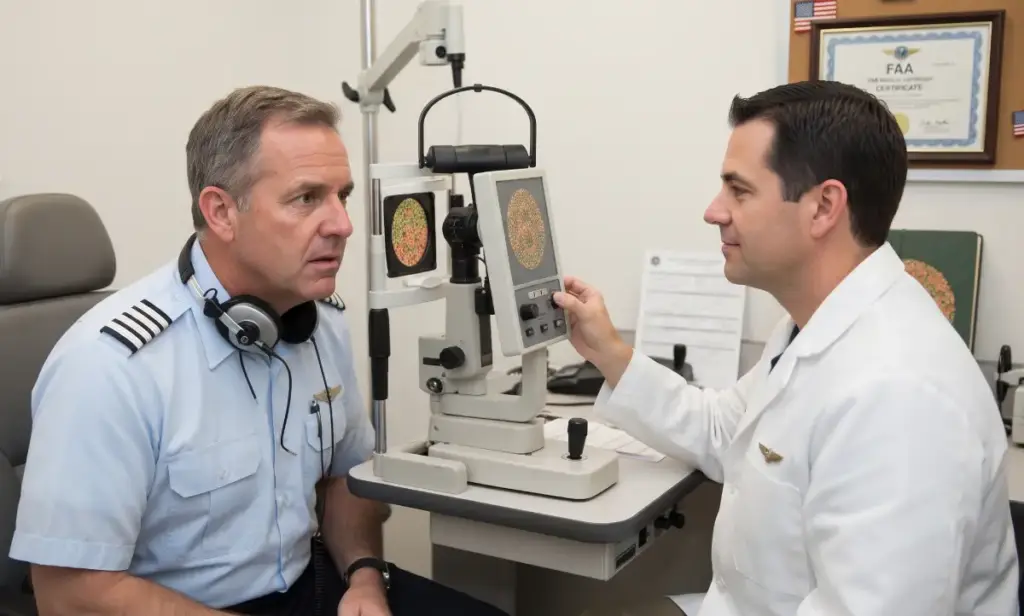
Had Eye Surgery and Need FAA Color Vision Testing?
If you’ve had LASIK, PRK, SMILE, or cataract surgery, Dr. Weinberg can help you understand the appropriate FAA color vision testing and what to expect after your procedure.
SMILE and Color Vision Testing
SMILE uses a small corneal incision to correct refractive errors. Like LASIK and PRK, it does not correct inherited color vision deficiency.
Temporary visual changes can occur during recovery, making stable vision and the absence of significant complications important considerations for FAA medical certification.
Other Eye Procedures
Pilots may also undergo ICL implantation, corneal, glaucoma, or retinal procedures. Their effects on vision vary by procedure and condition.
When considering FAA color vision requirements by Medical class, focus on your current vision and recovery rather than assuming every procedure affects color testing the same way.
Eye Procedures and FAA Vision Requirements at a Glance
| Procedure | Main purpose | Possible visual changes | Important FAA consideration |
| LASIK | Correct refractive errors | Glare, halos, fluctuating vision | Stable post-operative vision |
| PRK | Correct refractive errors | Haze, glare, longer recovery | Recovery and visual stability |
| SMILE | Correct refractive errors | Temporary visual fluctuations | Appropriate post-operative recovery |
| Cataract surgery | Replace cloudy natural lens | Changes in clarity and color appearance | Post-operative eye evaluation |
| ICL | Correct certain refractive errors | Depends on individual outcome | Procedure-specific evaluation |
The procedure itself does not automatically determine the outcome of color vision testing. Your current visual condition and the applicable FAA standards are what matter.
When Should You Take an FAA Color Vision Test After Eye Surgery?
Timing matters because vision may continue changing during the healing process.
The FAA’s guidance for refractive procedures provides specific recovery considerations. For example, the current FAA Eyes–Refractive Surgery Status Summary lists a minimum recovery period of 2 weeks for LASIK and SMILE and 12 weeks for PRK before the applicable post-operative evaluation process.
These are not simply guarantees that every pilot will be ready to fly or test immediately afterward. Vision should also be stable, and significant complications should have been resolved.
If you have recently had surgery, consider:
- The type of procedure performed.
- How long ago the procedure was completed.
- Whether your vision has stabilized.
- Whether you are experiencing glare, halos, haze, or other symptoms.
- What documentation your AME requires.
This is particularly relevant when reviewing FAA vision requirements after LASIK, because meeting a recovery period and meeting all applicable visual standards are separate considerations.
How Can Pilots Prepare for FAA Color Vision Testing?
Preparation does not need to be complicated. The goal is to know your history and arrive with the information your aviation medical professional may need.
5 Practical Steps Before Testing
- Know your eye surgery history
Keep the procedure name and date available.
- Understand your previous color vision testing
If you have already completed an FAA-approved color vision test, know when and where it was performed.
- Keep your eye-care records
Post-operative reports and relevant evaluations can help document your current visual status.
- Confirm the current FAA testing process
Do not rely on an old article, forum post, or outdated pilot experience when current FAA requirements are available.
- Speak with your AME if you have concerns
If you have previously failed testing or are searching for information about a Failed FAA color vision test Florida, an aviation medical professional can help explain your next steps.
Good preparation is about having accurate, current medical information and not trying to influence the test result.
Common Mistakes Pilots Should Avoid
There are a few misconceptions that can contribute to making the process more stressful than it needs to be about.
- Assuming LASIK cures color blindness: It does not correct color blindness.
- Vision testing at a time when vision is changing: Vision following surgery can change post-operatively.
- Overlooking visual symptoms that persist: Glare, halos, haze, and night vision issues need evaluation.
- Using outdated FAA information: Color vision testing requirements have changed.
- Forgetting surgical records: Keep relevant documentation available for your medical evaluation.
- Assuming all eye procedures have the same recovery: LASIK, PRK, SMILE, and cataract surgery all differ in recovery considerations.
Key Takeaways for Pilots
- Surgical treatment is not the cure for inherited color blindness.
- The procedures such as LASIK, PRK, and SMILE deal with refractive issues.
- Cataract surgery helps to enhance the visual acuity compromised due to clouded lens.
- Post-operative issues of glare, halos, haziness, and instability in vision might be pertinent to FAA medical examination.
- Recovery requirements vary depending on the procedure.
- Current FAA-approved computerized color vision testing should be distinguished from older testing information.
- Pilots must take their own situation and current visual status into consideration instead of assuming that a surgery will improve a color vision result.
Preparing for FAA Color Vision Testing After Eye Surgery
Eye surgery may cause some alterations in visual clarity and contrast perception or in color vision appearance after recovery, yet the operations like LASIK, PRK, SMILE, and cataract surgery will not be able to correct color vision deficiency. By knowing the LASIK effect on FAA color vision test results as well as current FAA requirements, a pilot will be prepared with confidence.
The Pilot Color Vision Center, led by Dr. Weinberg, provides computerized color vision testing and guidance for pilots. If you are wondering does eye surgery affect color vision test results, contact the center to discuss your options.
Call (561) 248-4627 or email Dr. Weinberg at aweinberg@medavex.org to get started.
FAQs
Does LASIK change your color vision test results?
However, LASIK surgery does not treat congenital color vision problems because it is an eye operation that involves the reshaping of the cornea. There may be variations in visual symptoms experienced after the procedure.
Do I need to retest after cataract surgery?
It depends on your circumstances and the FAA requirements applicable to your medical certification. Your AME can advise you about additional testing or documentation.
Should I get my color vision test before or after eye surgery?
When you can return depends on the procedure and how well you’re recovering. Talk to your eye-care professional and AME about when to set up testing.
Can cataract surgery improve color vision?
When a clouded lens has caused the light to appear unfocused, cataract surgery can make colors brighter or clearer. It does not rehabilitate inherited color vision deficiency.
Can LASIK correct color blindness?
No, LASIK is designed to treat nearsightedness, farsightedness and astigmatism. It does not treat inherited color vision deficiency.