
“But I already passed this test in my home country.” We hear this constantly from international pilots walking into Florida flight schools, usually pretty confused about why they’re being asked to sit through another color vision screening. Fair question, honestly. With flight schools across Florida seeing a wave of new international students right now heading into fall training cycles, this mix-up comes up more than you’d think.
So let’s clear it up. Here’s what the FAA color vision test for foreign pilots actually requires, and why your home country’s results probably don’t transfer the way you’d expect.
Why Doesn't My Home Country Test Just Carry Over?
Short answer: different aviation authorities, different standards, different testing methods. ICAO sets a baseline for member countries, but individual civil aviation authorities implement color vision requirements in their own way and the FAA runs its own specific protocol that doesn’t automatically recognize outside results.
Does ICAO color vision test transfer to FAA requirements? Not directly, no. Even if your home country’s test met ICAO standards, the FAA still wants you tested using its own approved methods, administered by an FAA-designated examiner.
International Pilot FAA Medical Certificate Florida: What's Actually Required
If you’re pursuing an international pilot FAA medical certificate Florida flight schools require for enrollment, color vision testing is just one piece of a broader medical exam. Here’s what’s typically involved:
- A complete FAA medical exam performed by an Aviation Medical Examiner (AME)
- Vision testing, including color vision assessment using FAA-approved equipment
- Hearing, cardiovascular, and general health screening
- Documentation of any prior medical history or existing conditions
- Verification of identity and pilot license status, if applicable
Color vision specifically gets flagged because the FAA uses its own approved testing instruments, not whatever equipment or method was used back home.
Foreign Pilot License Validation FAA Medical: How the Two Connect
Here’s where a lot of confusion happens. Foreign pilot license validation FAA medical requirements are actually two separate processes that often get lumped together. Validating a foreign license lets you fly certain aircraft in the U.S. under specific conditions, but it doesn’t automatically satisfy FAA medical requirements including color vision testing, if you’re planning to train, test, or fly under FAA regulations directly.
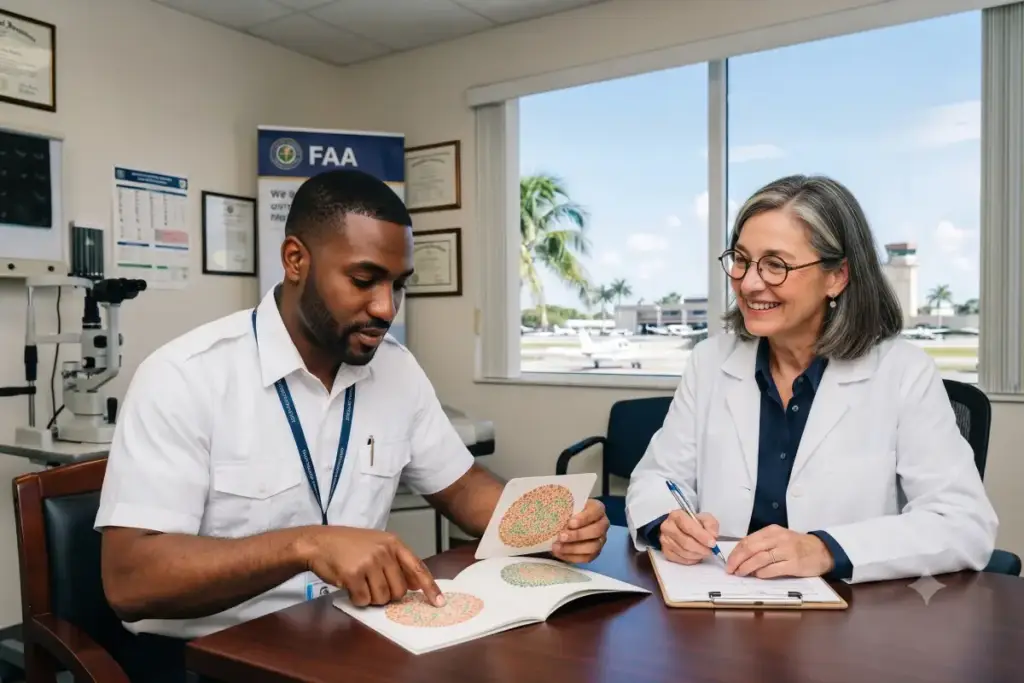
Preparing for Flight Training This Season?
Getting your medical requirements sorted early keeps your training schedule on track.
FAA Medical Exam for International Flight Students: What to Expect
For students specifically, the FAA medical exam for international flight students usually happens early in the enrollment process, often before training even begins. Flight schools typically require this upfront because a color vision deficiency, if undetected until later, can seriously limit which certificates and ratings a student can eventually pursue.
Testing early also just saves everyone time. Nobody wants to discover a color vision issue halfway through a training program that assumed full certification was possible from day one.
Color Vision Test Florida Flight School International Students Go Through
Most color vision test Florida flight school international students complete happens locally, right alongside their other required medical exams. Florida’s a popular training hub for international students specifically because testing facilities here are used to working with pilots coming from all kinds of aviation backgrounds and licensing systems.
If your original results came back inconclusive or borderline, that doesn’t necessarily end your aviation career. Additional testing, like the FAA Rabin Cone Contrast Test, exists specifically for pilots who need a more detailed evaluation beyond a basic screening.
What Happens If You've Already Passed a Color Vision Test Before?
This is genuinely one of the most common frustrations we hear. You passed testing back home, sometimes years ago, and now you’re being asked to do it again. It’s not about doubting your original results, it’s that the FAA color vision test for foreign pilots uses specific instruments and pass/fail criteria that simply aren’t identical to other countries’ systems, so retesting is standard practice, not a personal inconvenience.
Know more about Understanding the FAA Rabin Cone Contrast Test in Florida: A Pilot’s Guide if your initial results came back borderline and you want to understand what additional testing actually involves.
Getting Through Testing Without the Stress
At Pilot Color Vision Testing, we work with FAA-approved instruments including the Waggoner Computerized Color Vision Test, the Rabin Cone Test, and full FAA Computerized Color Vision Tests to give pilots clear, accurate results the first time. For international students especially, having someone walk you through the process rather than just handing you a test and a pass/fail slip makes a real difference in understanding what your results actually mean for your certification path.
The Bottom Line for International Pilots
If you’re training or certifying in Florida under FAA regulations, plan on completing the FAA color vision test for foreign pilots regardless of what you’ve already done back home. It’s not a bureaucratic inconvenience so much as a standardization requirement, the FAA needs consistent, comparable results across every pilot it certifies, no matter where their training started.
FAQs
Does my home country pilot license color vision test count for the FAA?
Generally no. The FAA requires its own approved testing methods regardless of prior results from another country’s aviation authority.
Do I need a new FAA medical certificate if I already have an ICAO medical certificate?
Yes, if you’re training or certifying under FAA regulations, since ICAO certification doesn’t automatically satisfy FAA-specific requirements.
Why did my FAA medical examiner ask me to retake a color vision test I already passed?
The FAA uses specific approved instruments and criteria that differ from other countries, so retesting is standard, not a red flag on your original results.
Can international flight students get an FAA medical exam in Florida?
Yes, Florida has extensive experience testing international students and is a common training hub for this exact reason.
Is a foreign color vision certificate accepted by the FAA?
Not typically on its own. The FAA generally requires testing through its own approved methods before certification.
What do I need to bring as an international pilot for my first FAA medical?
Valid identification, any existing pilot license
How long does an FAA color vision test take for a visiting pilot?
Valid identification, any existing pilot license
Most standard color vision screenings take well under an hour, though additional testing like the Cone Contrast Test may take a bit longer.
Get Clear, Accurate Results the First Time
Pilot Color Vision Testing offers FAA-approved instruments and experienced guidance for pilots of every background. Contact us today at (561) 248-4627 or email us at aweinberg@medavex.org to schedule your color vision test in Florida.