
Summer is one of the busiest seasons for flight training in South Florida. The weather cooperates, schools are out, and a lot of student pilots who spent the spring doing ground school are finally booking their first medical appointments. For most of them, the exam goes smoothly. For some, the color vision screening catches them off guard and suddenly the path forward isn’t as clear as they expected.
If you’re a pilot in or around West Palm Beach dealing with a color vision flag, or you simply want to know exactly what to expect before you walk into that appointment, this guide covers everything. Getting a pilot color vision test in West Palm Beach, Florida doesn’t have to be stressful when you understand how the process works.
Why Color Vision Testing Matters for Pilots
Color isn’t decorative in the cockpit, it’s functional. Pilots rely on color-coded information constantly:
- Runway lighting (white, red, green, blue)
- Navigation chart symbology
- Aircraft position lights for traffic separation
- Cockpit warning indicators
- Weather radar intensity displays
The FAA requires pilots to demonstrate they can distinguish these colors reliably. That starts with the color vision screening at your aviation medical exam and for some pilots, that’s where things get complicated.
What Happens During the Standard Screening
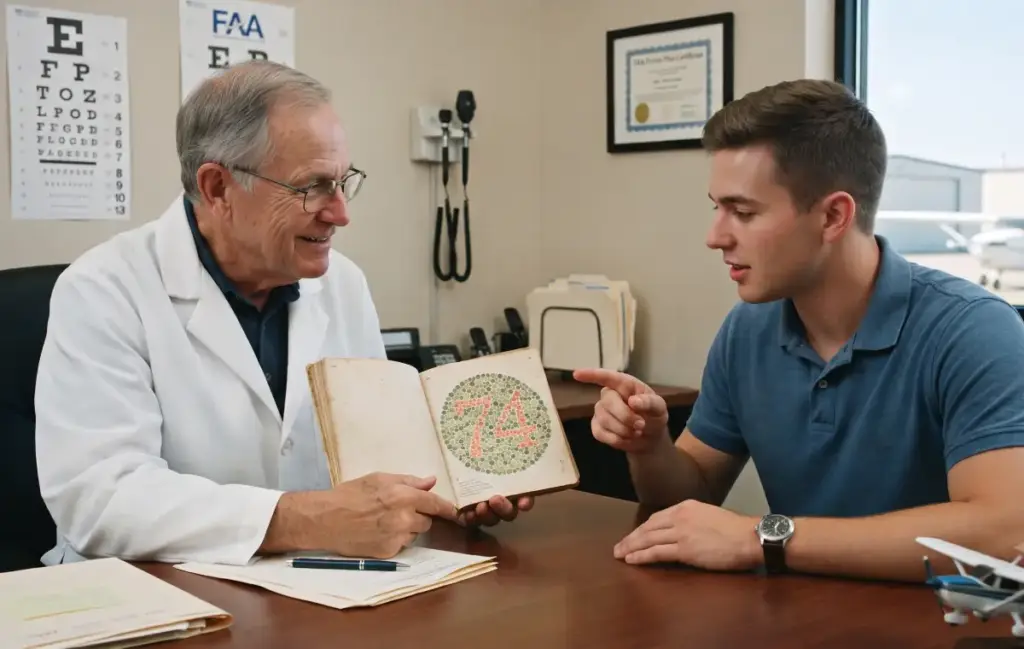
Most Aviation Medical Examiners use the Ishihara Color Plate Test for initial color vision screening. It’s the one with the numbers hidden inside colored dot patterns. It’s quick, widely available, and familiar but it’s also known to flag pilots who have mild color deficiencies that don’t actually affect their ability to perform aviation tasks safely.
If you don’t pass the Ishihara at your AME’s office, your medical certificate doesn’t automatically get denied. What happens next is what matters and there are real options.
To understand the full scope of what’s available, it helps to know more about the Waggoner Color Vision Test and FAA Rabin Cone Contrast Test two of the most commonly used alternatives for pilots who don’t pass standard plate screening.
FAA-Approved Alternative Tests Available to Pilots
The FAA allows multiple alternative color vision tests for pilots who fail standard screening. Each one works differently and measures color perception in a different way.
Test | What It Measures | Format |
Waggoner Computerized Test | Pseudoisochromatic pattern recognition | Digital, computer-based |
Rabin Cone Contrast Test | Individual cone sensitivity (red, green, blue) | Calibrated monitor |
CAD Test | Evaluates color discrimination thresholds using a calibrated digital display. | Dynamic digital display |
OCVT | Operational performance in actual flight conditions | Aircraft or simulator |
Not every AME offers all of these. Finding a provider who specifically specializes in color vision assessment with properly calibrated, FAA-accepted equipment makes a real difference in both accuracy and outcome.
For a full breakdown of what each test involves and how they compare, learn more about FAA-Approved Color Vision Test options available to pilots navigating this process.
Getting a Pilot Color Vision Test in West Palm Beach Florida: What to Actually Expect
Here’s what the appointment experience looks like from start to finish:
Before you arrive:
- Confirm the facility uses calibrated FAA-approved equipment, not all color vision testing setups meet this standard
- Bring your corrective lenses if you use them for flying
- Know your current medication list in case it’s relevant
At the appointment:
- You’ll be seen by a provider experienced in aviation color vision assessment
- The specific test or tests administered depend on your situation whether this is a first-time screening, an alternative test after failing the Ishihara, or a re-evaluation
- The environment is controlled: lighting, screen calibration, and distance are all standardized because they affect results
- The process is straightforward and doesn’t take long most testing sessions run 30 to 60 minutes
- Results are documented in a format usable for FAA submission
After testing:
- If you pass, results get submitted as part of your medical certification process
- If further steps are needed, your provider can walk you through what comes next
- Follow-up appointments may be scheduled depending on your certification pathway
To understand exactly how the technology behind these exams works, you can learn more about How FAA Computerized Color Vision Testing Works before your appointment so nothing catches you off guard.
Why Having the Right Provider Matters
A pilot color vision test isn’t something every general clinic or AME handles with the same depth. What sets a specialized color vision center apart:
- Equipment is properly calibrated to FAA standards, uncalibrated screens produce unreliable, non-acceptable results
- The provider understands the full range of alternative tests, not just one option
- They know how to document results specifically for FAA submission
- They can advise on what happens next if additional steps are needed
- They’ve worked with pilots before and understand the stakes
Pilot Color Vision Testing, run by Dr. Weinberg, a Senior HIMS Aviation Medical Examiner who has built his practice entirely around aviation certification, operates with this level of specialization. This isn’t a side service at a general medical clinic. It’s the whole focus.
Ready to Get Your Color Vision Testing Done Right?
Don’t let a failed Ishihara be the end of the conversation. Specialized testing at a properly equipped facility gives you the best possible shot at continuing your aviation journey.
Multiple Tests Exist for a Reason
A lot of pilots don’t realize how much flexibility the FAA actually builds into the color vision process. The Ishihara is a screening tool, not the final word. The FAA explicitly allows alternative testing pathways because plate-based screening may produce false positives, pilots with mild deficiencies that genuinely don’t affect their flying end up flagged by a test not designed for operational aviation assessment.
To understand the reasoning behind this policy, it’s worth knowing more about Why the FAA Allows Multiple Color Vision Tests Like Rabin and CAD for Pilots the answer comes down to the difference between clinical color blindness testing and functional aviation performance.
If You're a Florida Pilot Who's Already Been Flagged
Getting flagged on a color vision screen doesn’t end your aviation plans but it does require you to navigate the next steps correctly. The wrong approach (retesting with the same tool that already flagged you, or assuming denial is final) wastes time. The right approach is getting to a provider who specializes in this specific pathway.
Learn more about How Florida Pilots Can Avoid Unnecessary Color Vision Disqualifications the answer almost always comes down to accessing the right tests through the right provider before assuming the worst.
FAQs
Where can a pilot get a color vision test in West Palm Beach?
Is Pilot Color Vision Center near West Palm Beach Airport?
How long does the FAA color vision test take?
What should I bring to my color vision testing appointment?
Does insurance cover FAA pilot color vision testing?
Take the Next Step Toward Your Aviation Certification
Pilot Color Vision Testing exists specifically to give pilots every possible opportunity to demonstrate their color vision capability under properly controlled, FAA-accepted conditions. Dr. Weinberg has invested his entire practice in this, the equipment, the expertise, and the process are all built around giving pilots the pilot color vision test in West Palm Beach, Florida that actually serves their aviation goals.
📞 Contact Pilot Color Vision Testing today to schedule your appointment and get the right test done right. Call us at (561) 248-4627 or email us at aweinberg@medavex.org